


Marvel Through a Christian lens: The Faith, Culture, and Business Behind the Brand
- The Box Office Nerd
- Oct 7, 2025
- 8 min read

Intro
Marvel Entertainment, a giant in media, comics, games, movies, TV. Most well known for the great MCU. But who is behind the scenes? What religions, values and people have influenced Marvel in the past? What business decisions have lead to Marvel being where it is today? And how should Christians go about consuming Marvel content?
The Early Years
Marvel started as Timely Publications which was founded by Martin Goodman in 1939.
Martin Goodman was a huge publisher in the 30s, 40s, and 50s. He published many magazines, comics, and papers. Timely Publications was simply another venture for him. Timely Publications was eventually renamed to Atlas Comics in 1951, and then to Marvel Comics in 1961. Martin Goodman was ethnically Jewish and practiced Judaism throughout his life. He was also a supporter of equality of race, gender, and sexual orientation. For the 1940s, this was absolutely radical. Goodman was also very patriotic. During WWII, he used his publishing companies to create propaganda for the war effort. He was also a businessman and entrepreneur first and foremost; his focus was always profit maximization, sometimes at the expense of paying his writers well and the creative side of publishing. Stan Lee was hired in 1939 at 16 years old as well, and he would eventually become one of the main writers for Marvel Comics. He also helped create characters such as Spider-Man, the X-Men, Iron Man, Thor, and many more. Stan Lee was also ethnically Jewish but did not practice Judaism. Some claim he was influenced by the Bible and may have been Christian, but there is no hard evidence of this. Nonetheless, he was known to be a very kind and genuine man. Stan Lee continued to have influence in the Marvel brand up until his death in 2018. Another influential writer was Jack Kirby, who was hired in 1940 and helped create Captain America, The Avengers, Black Panther, and many more. Jack Kirby was also ethnically Jewish and practiced Judaism throughout his life.
Overall, we can see that the early days of Marvel Comics were heavily influenced by Jewish culture and religion. This is why there are some mentions of God in Marvel Comics, but never any mentions of Jesus. This has also had effects on the worldbuilding and themes of Marvel Comics. While they heavily supported Judeo-Christian values, they never preached or even hinted at a message of salvation through Jesus Christ.






Left to right: Martin Goodman, Stan Lee, Jack Kirby
The Transitional Era
In 1968, Martin Goodman’s publishing company was sold to Perfect Film, later renamed Cadence Industries, which included Marvel Comics. Cadence Industries was owned at the time by Martin S. Akerman. Akerman was an ethnically Jewish man who did not practice Judaism. He was a prominent businessman known for mergers and acquisitions. Then in 1981, Marvel Comics was sold again, this time to New World Pictures. Under New World Pictures, Marvel Comics continued, but its focus shifted to TV and film prospects. New World Pictures was owned and founded by Roger Corman. Roger was a businessman who was raised Catholic; however, it is not clear if he retained his faith throughout his life. Soon after this, in 1986, Marvel was again sold, this time to a man named Ronald Perlman, owner of the Andrews Group. Perlman took Marvel public in 1991 and rapidly expanded Marvel into the toy market. Perlman is of Jewish ethnicity, and despite not practicing early in life, after a trip to Israel, he became a devout Orthodox Jew. As we can see, even after the early days of Marvel, Judaism and Jewish culture continued to have huge impacts on Marvel.
With most of the figureheads of the owning companies of Marvel being ethnically Jewish, and many of them practicing Judaism. One example of how this comes through is in the character Sabra. Sabra first appeared in Marvel Comics in 1981. She is an Israeli superhero who has the Star of David on her chest. The character (though severely changed to have almost no resemblance to the comics counterpart) also recently appeared in the new Marvel film Captain America: Brave New World.
In 1996, Marvel Entertainment filed for bankruptcy due to the comic book market crashing. Because of this bankruptcy, Marvel sold off many of its character film rights to movie studios to stay afloat. This included selling Hulk film rights to Universal Studios, Spiderman film rights to Sony Pictures, and X-Men film rights to 20th Century Fox. Marvel has since regained rights to Hulk and the X-Men through Disney mergers; however, they have yet to regain the rights to Spider-Man for film. Soon after this bankruptcy, the owners of ToyBiz took control of Marvel Entertainment and renamed it Marvel Enterprises. These two men were named Issac Purelmutter and Avi Arad. Both have still influenced Marvel up until very recently. Issac (Ike) Purelmutter is ethnically Jewish and served in the IDF. He is also a republican and conservative. He was a major donor for Trump in 2016, 2020, and 2024. He has also donated to other republicans and conservative PACs. He even served as an unofficial advisor to Trump in the past. Avi Arad has a very similar background; he also served in the IDF and is an outspoken supporter of Israel. Although he is ethnically Jewish, it is not public knowledge as to if he is a practicing Jew. Once again, even after so many acquisitions, we can see that Marvel has a very strong Jewish influence. It was after this takeover that Marvel Studios was founded as well. Kevin Feige was hired as the head of this studio and began producing films. He still heads the Marvel Division of Disney to this day. He started by working on the early 2000s X-Men films and eventually went on to oversee the entire MCU. Kevin Feige keeps his personal life and beliefs very private, and his religion is unknown. However, many speculate that he is either an agnostic or an atheist, as he has never expressed interest in religion. His political standings are also unknown.


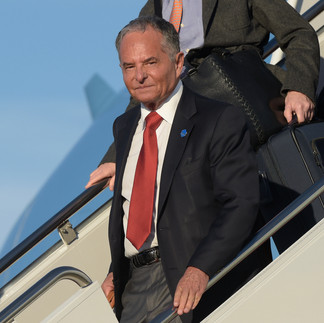

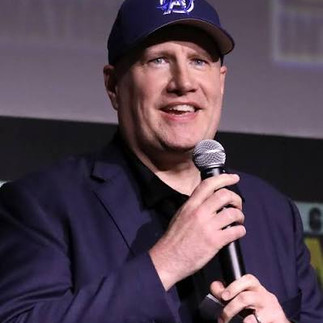
Left to right: Avi Arad, Issac Purlmutter, Kevin Fiege
The Disney Era
Finally, in 2009, Marvel Entertainment was purchased by the Walt Disney Company. Disney is known for left-leaning views as of recent. Many of their recent movies and shows have been criticized for being “woke,” or in other words, including plots and characters whose sole purpose is to make a political statement or spread a political idea. It was for this very reason that many claim Issac Perlmutter left Disney in 2023. Although other sources claim this was not his decision. Many newer Marvel shows and movies have also been criticized for being “woke,” including She-Hulk, which had feminist themes, with one of the most controversial being an exchange in the first episode where She-Hulk belittles Hulk’s past struggles because he is a man. Ms. Marvel also came under fire for seemingly promoting Islam when Marvel has never really promoted another religion before, unless that is, you count the Netflix-produced show Daredevil, in which the main character is Catholic, a point that is highlighted quite a bit in the show. Despite this, there have been many great shows and movies in recent years that did not come under fire for being “woke,” such as the Loki Series and Thunderbolts, which came out this year, along with many more. So, overall, Disney has, of course, had great influence over Marvel since the acquisition, with it becoming even stronger in recent years. However, there are still projects that seem mostly unaffected by Disney’s political leanings.
The reason it has ramped up in recent years may be that Marvel has been slowly being dissolved and folded into Disney instead of remaining as a separate entity under Disney. In 2019, Disney ended the Marvel Televison department and started making shows of their own, starting with WandaVision. In 2023, Marvel Studios as a whole was folded into Disney, and this was when Issac Perlumtter left Disney as well. Because of these moves, Disney has gained even more influence over Marvel. This also included the comics and games. For example, the popular Spider-Man Insomniac Game, although not made by Disney, was licensed to Insomniac by Disney, and it came under fire for including LGBTQ flags and other in-game murals and graffiti supporting LGBTQ causes. Recent comics have also included increasingly political messaging; for example, last year, Marvel had a huge run highlighting LGBTQ characters.
The longstanding CEO of Disney is Bob Iger, who served from 2000 to 2020, but then returned in 2022 and currently still serves as CEO. Bob Iger is Jewish, although it is unclear if he practices Judaism or if he ever has. However, his second wife is Roman Catholic, and their ceremony included elements from both traditions. Overall, we can see that throughout Marvel’s history, there have been strong influences from Judaism and Jewish culture, and some from Catholicism as well. Bob Iger is also a self-described centrist and has spoken out in support of Israel in the past. He was previously registered as a Democrat, but also served on a Trump advisory council.
Marvel has had many religious and cultural influences, mostly Jewish and some Catholic. It also used to have some conservative influences; however, it now seems to have mostly left-leaning influences. It has also switched hands many times in the past, and its media is created by many different people and licensed out to many different studios.




Bob Iger, Disney, Loki
A Christian Response
Now, to apply this to Christian consumption of this media. I’ve always been curious, and therefore pretty aware of the biases of Marvel and the larger Disney corporation. I believe that being knowledgeable about biases is very helpful in safeguarding against them. As long as I think critically about the media I am consuming, I will be just fine. So yes, while there are certainly some biases within Marvel, I will continue to interact with their media because it is something I enjoy, and I am able to think critically about what I consume. From a Christian perspective, I also think most Marvel content is okay to consume. It still supports some good values. Judaism and Christianity share a lot of the same values. Although there are some properties to be wary of, such as certain “woke” ideology or even depictions of the devil, which did actually kind of happen in the new Marvel show Ironheart.
As long as we watch with a critical eye and think about what narrative is being pushed, we will be okay. Additionally, as with any media, as Christians, we need to make judgments on what is good and acceptable to watch.
Some Christians find the Marvel property Deadpool to be unacceptable, too crass and violent, with little redeeming value; others just see it as a fun movie not to be taken seriously. I think both stances have merit.
I think decisions about what to watch, for the most part, need to be made by each Christian on their own. Only they know their shortcomings and temptations, and only they know what the holy spirit weighs on them to not watch.
Finally, although many people have controlled Marvel throughout the years, the biases have remained surprisingly consistent. Although there are few Christians who have owned Marvel, there are Christians working at Marvel. For example, Rob Liedfield, who ironically enough, is the creator of the character Deadpool. Chris Pratt is another outspoken Christian who has worked with Marvel, and there are many less famous ones within the Marvel corporation. As Christians we should feel free to consume Marvel content just the same as we consume other content. With a critical eye and staying grounded in our faith.
Thanks for reading!
Let me know if you have any thoughts and feel free to disagree with me!
If you are a Christian, would you/ have you watched Deadpool?
Sources
Avi Arad - Wikipedia, https://en.wikipedia.org/wiki/Avi_Arad. Accessed 6 October 2025.
Kevin Feige - Wikipedia, https://en.wikipedia.org/wiki/Kevin_Feige. Accessed 6 October 2025.
“Bob Iger - Wikipedia.” Wikipedia, the free encyclopedia, https://en.wikipedia.org/wiki/Bob_Iger. Accessed 6 October 2025.
Luebering, JE. “Marvel Comics | History, Characters, Facts, & Movies.” Britannica, 2 October 2025, https://www.britannica.com/money/Marvel-Comics. Accessed 6 October 2025.
“Marvel Entertainment | Marvel Database | Fandom.” Marvel Database, https://marvel.fandom.com/wiki/Marvel_Entertainment. Accessed 6 October 2025.
Ray, Michael. “Jack Kirby | Biography, Characters, & Influence.” Britannica, 28 August 2025, https://www.britannica.com/biography/Jack-Kirby. Accessed 6 October 2025.
“Roger Corman | Biography, B-Movies, Films, The Intruder, Documentary, & Facts.” Britannica, 8 September 2025, https://www.britannica.com/biography/Roger-Corman. Accessed 6 October 2025.
Sarkar, Patricia. “The History of Marvel Studios | Geeks.” Vocal Media, https://vocal.media/geeks/the-history-of-marvel-studios. Accessed 6 October 2025.
“Stan Lee | Biography, Comics, Characters, Cameos, & Facts.” Britannica, 27 September 2025, https://www.britannica.com/biography/Stan-Lee. Accessed 6 October 2025.
““The Narrative Wouldn't Exist Without Him As a Foil”- Thoughts on Martin Goodman.” Four Color Sinners, 21 July 2023, https://fourcolorsinners.com/2023/07/21/the-narrative-wouldnt-exist-without-him-as-a-foil-thoughts-on-martin-goodman/. Accessed 6 October 2025.
Zemler, Emily. “Ron Perlman Interview - Ron Perlman on Hand of God.” Esquire, 3 September 2015, https://www.esquire.com/entertainment/tv/interviews/a37612/ron-perlman-hand-of-god/. Accessed 6 October 2025


Comments